







AI consulting in Chicago covers everything from a one-hour staff workshop to a months-long project, and providers use the same term for both. That makes it hard for a business owner to see what they would be paying for, or whether they need outside help at all. This article explains what the work includes, when your business could use it, and what to check before AI use spreads.
What Does AI Consulting in Chicago Include?
AI consulting is outside help with deciding where AI belongs in your business and with using it safely. The help comes in stages, and a business can stop at any of them.
The first stage is education. A workshop shows staff what AI tools can and cannot do and which company information should never go into them. Next comes an AI readiness assessment, which reviews your technology, your data, and the AI tools staff already use. A strategy follows that ranks the tasks where AI is worth trying. The later stages are setting up tools, training people to use them, and checking that they are used as agreed.
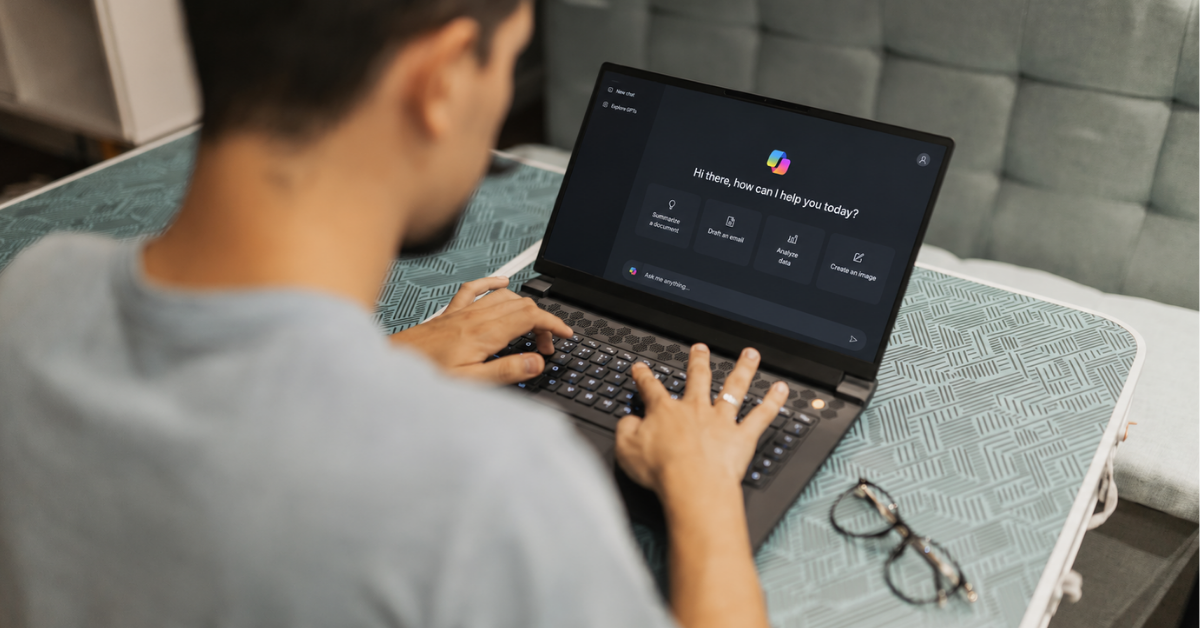
Few small and midsize businesses need every stage. A 60-person firm that wants staff to use Microsoft 365 Copilot, the AI assistant built into Word, Outlook, and Teams, needs different help from a company automating work across several departments. Good consulting matches the help to the business, so compare providers on which stages they offer.
When Does Your Business Need an AI Consultant?
The clearest sign is that employees already use AI tools, and leadership does not know which ones or what information goes into them. Staff pick up free chatbots to draft emails or summarize documents because they save time, with or without a company policy. A consultant can set rules for that use and show where it helps the business.
Other signs are more specific.
- You have a repetitive task, such as matching invoices or entering data from intake forms, and suspect software could handle part of it.
- You want to try AI but cannot judge between competing proposals.
- Your Microsoft 365 subscription may already include AI features that nobody has reviewed.
- You have no written rules on how staff should treat client or company information when using AI.
Whether you need a consultant does not depend on whether you already use AI. The test is whether you have a specific problem to solve and the means to run AI safely. Without a problem to solve, waiting is a reasonable choice.
Where Does AI Make Practical Sense for Your Business?
Once you have a problem worth solving, a consultant’s main job is to test an idea before you pay for it. For each task, they check whether AI can do it well, what benefit to expect, and what setup it needs.
For small and midsize companies, AI for business in Chicago usually begins with modest tasks. Drafting routine letters and reports is one, since AI tools can shorten the first draft. Finding a document or answer buried in shared drives and email is another. Training staff on Copilot is worthwhile if you already pay for it, since a licensed tool nobody knows how to use gives you nothing. Some repeatable steps, such as routing a document for approval, can be automated, which could free up staff time.
The existence of an AI tool for a task does not make it the right choice for you. It may not suit your data, team, or budget, and a good consultant will say so when a proposed use is not worth the effort.
What Security Risks Should You Check Before Using AI at Work?
Even a worthwhile use carries risks. Four are worth checking before AI use expands, and each has a clear fix.
The first is confidential information. Staff who paste client details or internal documents into an unapproved tool may share data your business must protect. The fix is a written rule on which tools are approved and what may go into them.
The second is accuracy. AI tools can give confident answers that are wrong, so a person should check anything that goes to a client or informs a decision.
The third is ownership. Your business may have nobody responsible for approving AI tools and overseeing their use. Naming an owner fixes that.
The fourth is access. An AI assistant connected to company files can show a user anything their account can open. If permissions are too broad, it can surface files the person was never meant to see, so review who can open what before switching it on.
The NIST AI Risk Management Framework gives voluntary guidance for managing AI risks, and its Generative AI Profile covers generative AI, the tools that write text or produce images on request. At Elevity, security is part of technology planning, so these checks belong at the start of any AI project, ideally as part of an AI readiness assessment.
What Is an AI Readiness Assessment, and Why Start with One?
An AI readiness assessment checks where your business stands before you spend on tools. It looks at your current technology and data, how staff already use AI, and what you want AI to achieve. It also covers security requirements, training needs, and whether each proposed project is worth the effort.
The result is a next step, and it is often smaller than you might expect. It could be staff training, a written policy for AI use, a trial in one department, or a broader AI strategy for a small business with several promising ideas. Sometimes the finding is that a larger project is not justified yet, which prevents unnecessary spending on tools your business does not need.
Useful AI adoption starts with knowing what the business needs and where technology will make a measurable difference. That begins with an honest look at which AI tools your staff already use and which single task is worth testing first.
Elevity's IT consulting team takes the same approach to technology decisions. It starts with the outcome the business wants and chooses technology to fit.
Not Sure Where AI Fits into Your Business?
Contact Elevity to talk through your current technology, how your team already uses AI, and the right next steps for your business. You do not need to arrive with a project in mind.
FAQs
How much does an AI consultant cost?
There is no standard price, because the work ranges from a single workshop to a long project. Providers usually charge a fixed fee for an assessment, an hourly rate, a monthly retainer, or a project fee that includes setup. Request a written scope that says what you will receive, then compare quotes on that basis rather than on the total alone.
How do I choose an AI consultant?
Look for a provider that can explain in plain terms what it would do first in your business and why. It should be able to describe similar work for companies your size, say how it handles your data, and define what you receive at the end. A good consultant will also tell you when AI is not the right answer for a task.
Is AI consulting worth it for a small business?
It depends on the situation. It is more likely to pay off when staff already use AI, when leadership cannot decide which opportunities to pursue, or when the business handles sensitive client information. A very small business with light AI use and nothing sensitive may need only basic written rules and some self-training and can wait on formal consulting.
What is the difference between AI consulting and AI development?
Consulting helps you decide where AI fits and how to use it safely. Development builds custom AI software for a specific purpose. Many businesses can get what they need from existing tools such as Microsoft 365 Copilot, so confirm which of the two a provider offers before you compare quotes.